
COX Spinal Decompression in Brooklyn
If you have been dealing with low back pain, sciatica, disc irritation, stenosis-like symptoms, neck pain, or pain that gets worse with sitting, standing, or any kind of loading, you have probably already tried a few things. Maybe stretching helped briefly. Maybe adjustments, massage, or physical therapy took the edge off but did not hold. Maybe you have heard about spinal decompression and are wondering whether it is actually worth trying.
Here is what I want you to know upfront: at Functional Rehab in Gowanus, Brooklyn, COX flexion-distraction is one of the tools I use with certain patients, and it can be genuinely useful in the right clinical context. But it is not a magic table. It is not a standalone passive treatment that works independent of everything else. And it is not right for every person who walks through the door.
What I do at Functional Rehab is use COX decompression as part of a broader, exam-driven rehab approach. That means assessment first, hands-on care when appropriate, and a plan to rebuild movement capacity and strength so your body becomes less dependent on ongoing treatment over time. If you are looking for low back pain treatment in Brooklyn or a more thorough workup than you have received elsewhere, an evaluation is the right place to start.
What Is COX Flexion-Distraction?
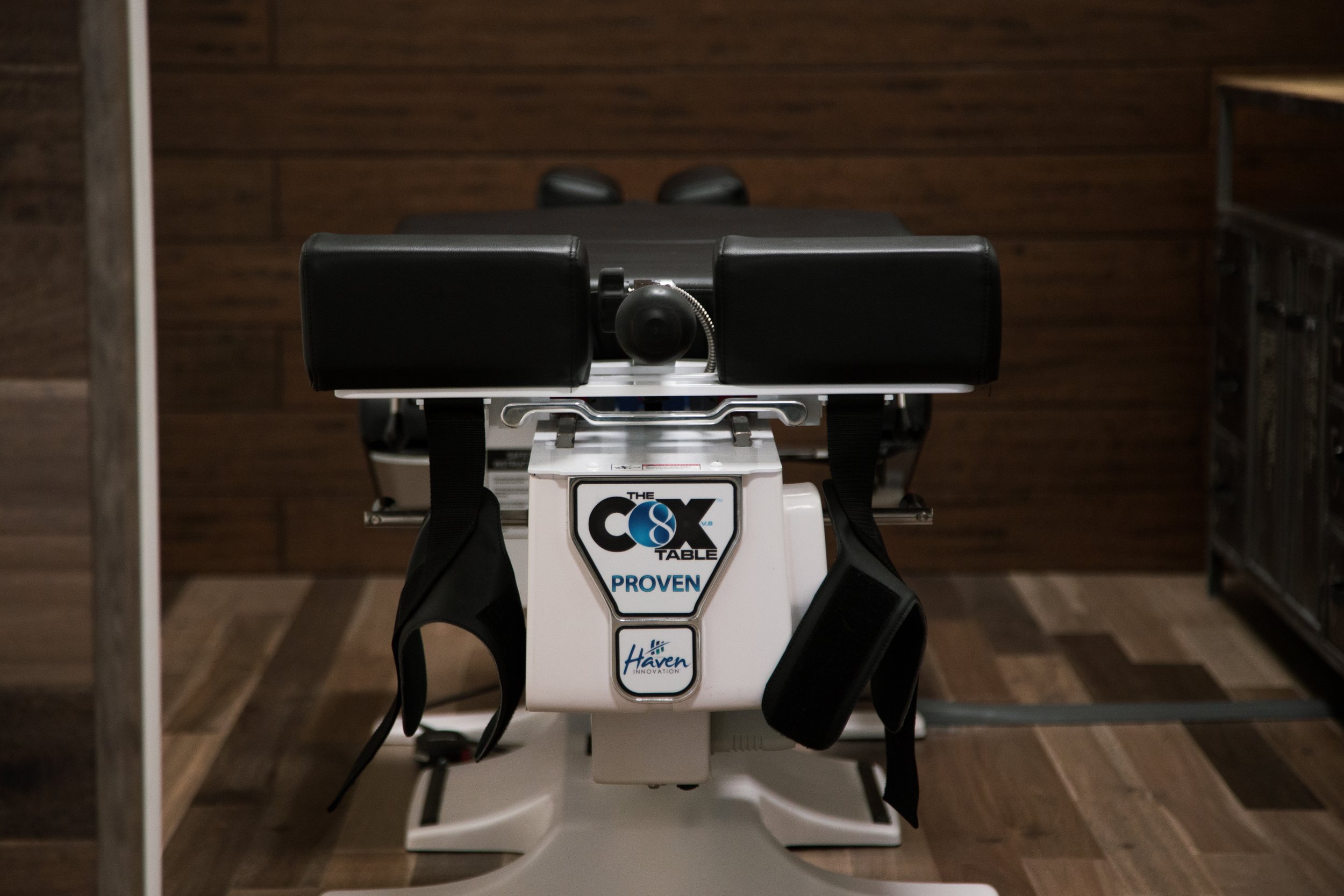
COX flexion-distraction is a hands-on chiropractic technique performed on a specialized segmented table that allows controlled, multi-directional movement of the spine. The technique was developed by Dr. James Cox, a chiropractor and researcher who has spent decades studying disc-related low back and neck pain. It has been in clinical use and ongoing refinement since the 1960s and has a meaningful body of published research behind it.
In practice, the table allows me to apply a gentle, rhythmic distraction force to specific segments of the spine while you lie comfortably face down. I control every aspect of the movement manually, using my hands and body weight rather than a motor or preset program. I can change the angle, the rhythm, the range of motion, and the location of the force based on what I feel in the tissue and how you respond during the session.
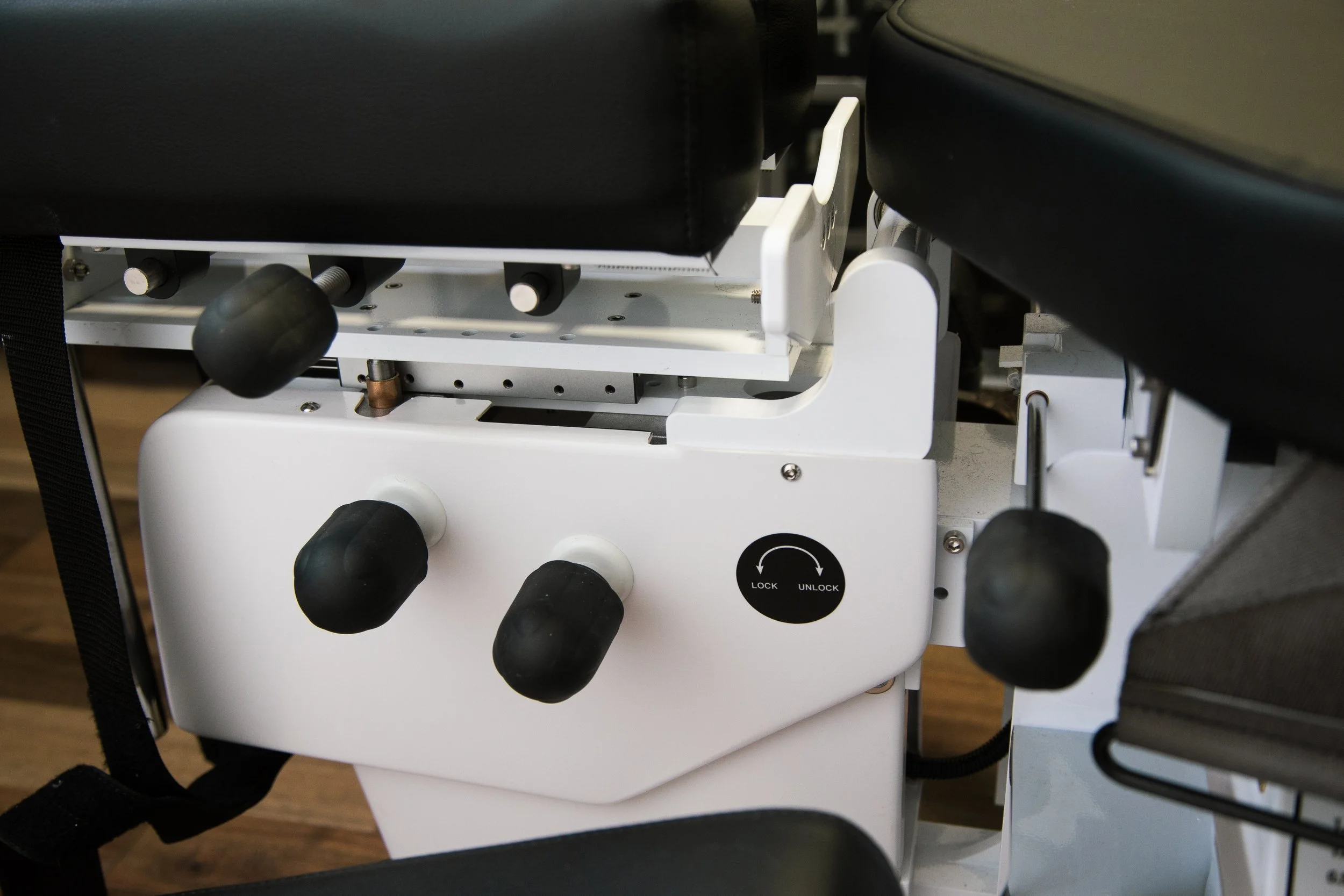
The table has multiple independent sections that can flex, extend, laterally bend, and distract. This allows me to target specific lumbar segments, disc spaces, or facet joints with a meaningful degree of precision. The same technique can also be applied to the cervical spine when the clinical picture warrants it.
Most patients describe the experience as gentle, rhythmic, and relieving, particularly in the earlier stages of care. It is not a high-velocity thrust or a ‘crack.’ It is a slow, deliberate mobilization with traction, and you are in communication with me throughout.
How COX Is Different From Generic Spinal Decompression
If you have researched spinal decompression, you have likely come across motorized decompression systems, often marketed under names like DRX9000, Triton DTS, or similar devices. These are traction-based tables where the patient is strapped in and a motor applies a pulling force to the spine through a preset protocol.
Automated decompression systems may help some patients, and I am not here to dismiss them entirely. But there are meaningful clinical differences between a machine-based approach and a hands-on, clinician-guided technique like COX.
I control every variable in real time. The angle, force, rhythm, and direction of movement are guided by what I feel under my hands and how you respond during treatment. If something seems to be aggravating rather than relieving, I can change it immediately, not at the end of a timed session.
Treatment evolves visit to visit. The approach can be modified based on your progress, your tolerance, and what reassessment reveals. There is no preset protocol running in the background.
The table is a starting point, not the complete plan. At Functional Rehab, COX decompression is integrated with orthopedic assessment, manual therapy, and progressive exercise. You are not simply strapped in and left to wait out a timer.
Clinical decision-making is continuous. I am present and responsive throughout every treatment, not just at the start and end of a session.
The real advantage at Functional Rehab is not just the table itself. The goal is not simply to decompress the spine. The goal is to understand why the area became sensitive, reduce irritation when appropriate, and then rebuild the movement capacity and strength needed to keep symptoms from returning.
“If you have tried generic decompression, adjustments, massage, or exercises without lasting relief, the next step is not guessing at another treatment. It is a proper evaluation. At Functional Rehab in Gowanus, I can assess whether COX flexion-distraction makes sense for your symptoms and how it should fit into a broader rehab plan.”
COX Decompression vs. Traditional Chiropractic Adjustments
One of the most common questions I hear is some version of: is this the same as a chiropractic adjustment? Do I need decompression or an adjustment? What is actually the difference?
It is a fair question, and the answer matters for your care.
A traditional chiropractic adjustment, also called high-velocity low-amplitude manipulation, involves a short, quick thrust applied to a spinal joint to restore motion, reduce pain, or improve joint mechanics. When it is appropriate, it can work well and work quickly. Many patients respond to adjustments, and they remain a useful clinical tool.
COX flexion-distraction is fundamentally different in how it works and what it is designed for. Rather than a brief thrust, COX uses slow, rhythmic, controlled traction and mobilization applied over the course of a treatment session. There is no high-velocity force. The goal is to reduce intradiscal pressure, decrease loading on an irritated nerve root, and improve segmental mobility in a way that is tolerable for patients who are too sensitized or too acute for thrusting techniques.
In practical terms, a patient with a highly irritable disc herniation, significant radicular symptoms, or a history of intolerance to adjustments is often a better candidate for COX than for traditional manipulation. The gentler, more graduated approach can reduce irritability enough that movement and exercise become tolerable again, which is where the real rehab work begins.
The two techniques are not competing approaches. At Functional Rehab, the decision about which to use comes from the exam, not from a default protocol. Some patients do well with adjustments. Some do better with COX. Some benefit from both at different stages of care. The common thread is that I assess first and treat based on what I find, rather than applying the same technique to every presentation.
If you have had adjustments before without lasting results, that does not necessarily mean manipulation was the wrong idea or that spinal decompression is automatically the answer. It means the full picture may not have been addressed. That is what the evaluation is for.
Lumbar COX Decompression for Low Back Pain, Sciatica, and Disc Irritation
The lumbar spine is where COX flexion-distraction has the deepest research and clinical track record. Depending on your exam findings and symptom pattern, it may be a useful tool for a range of low back and leg presentations. Patients dealing with sciatica often find their way here after treatments that addressed the pain but not the underlying load issue.
Patients who may benefit from lumbar COX decompression often present with:
Low back pain that worsens with prolonged sitting or standing
Pain, aching, or burning into the glute or down one or both legs
Numbness or tingling in the leg or foot
A history of disc bulge or disc herniation, confirmed or suspected
Pain that worsens with compression, lifting, or loading
Stiffness and guarding in the morning or after extended rest
Sciatica-like symptoms, regardless of formal imaging findings
Difficulty tolerating daily activities, exercise, or desk work
That said, the first step is always an evaluation. Not everyone with these symptoms is a candidate for decompression, and not everyone who has been told they need it actually does. The exam helps me understand what is driving the sensitivity and whether COX is the right tool to begin with.
Some patients come in with imaging showing significant disc findings but have fairly manageable symptoms. Others come in without any formal diagnosis but are significantly limited in their daily function. What matters clinically is the symptom pattern, the behavior of those symptoms, and how the nervous system is responding, not just what an MRI report says.
Cervical COX Decompression for Neck Pain and Arm Symptoms
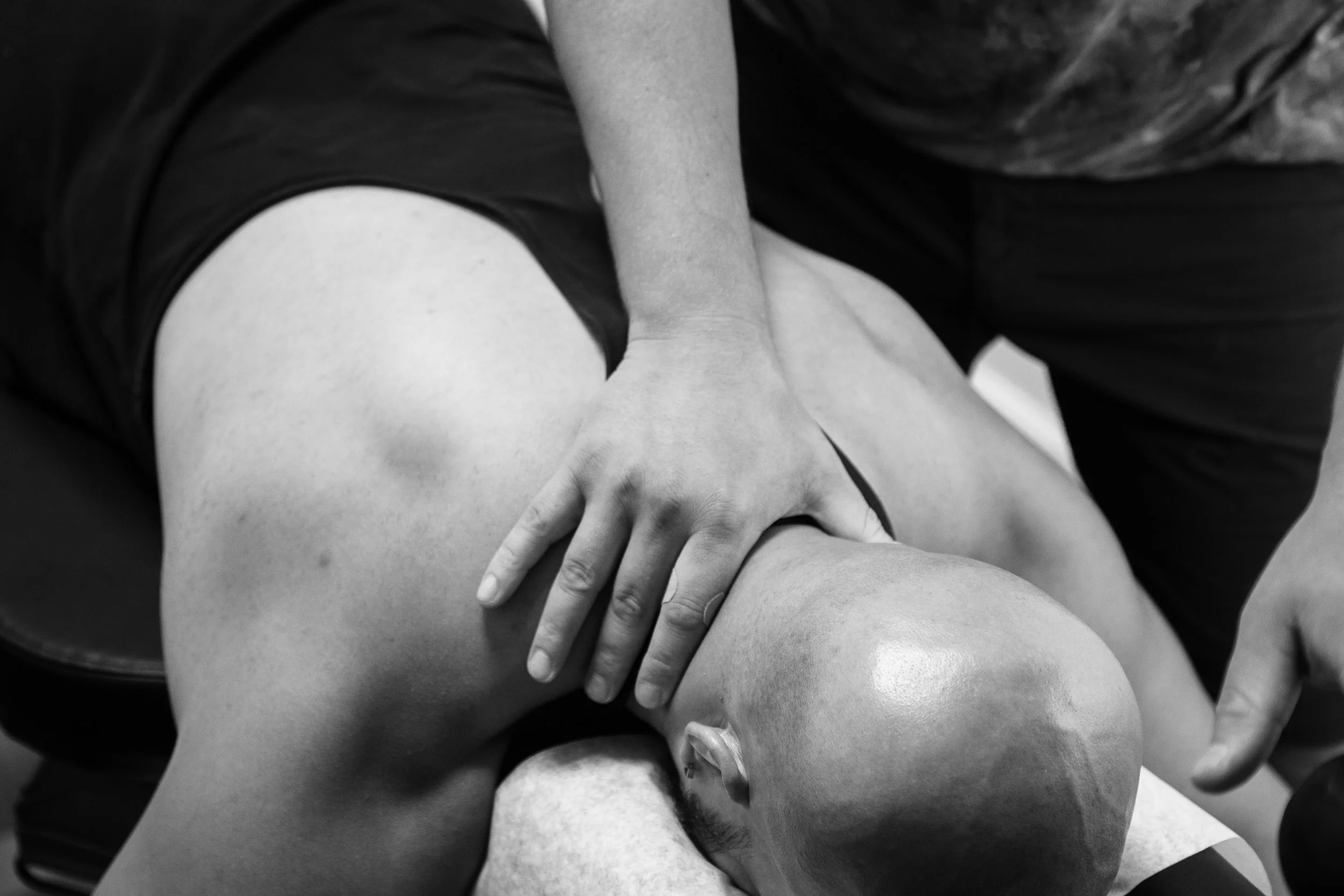
Many people do not realize that COX flexion-distraction can also be applied to the cervical spine. When the clinical picture warrants it, I can use a similar decompressive approach at the neck with a controlled, gentle technique that does not require high-velocity manipulation. If you have been searching for and want a thorough assessment rather than a generic protocol, that is exactly what I do.
Cervical presentations where this may be appropriate include:
Neck pain with or without local stiffness
Pain referring into the shoulder blade, shoulder, or upper arm
Arm pain, numbness, or tingling that appears to originate at the cervical spine
Cervical disc irritation, confirmed or suspected on exam
Stiffness and guarding limiting rotation or extension
Symptoms aggravated by desk work, driving, sustained head-forward postures, or extended phone use
Cervical decompression at Functional Rehab is gentle, carefully dosed, and based entirely on your response during and after treatment. I pay close attention to how the neck responds in the first session before progressing the technique.
One important thing worth mentioning: neck symptoms are rarely just about the neck. Thoracic mobility, shoulder position, breathing mechanics, and postural endurance all contribute to how much stress lands at the cervical spine over the course of a day. At Functional Rehab, I use a regional interdependence approach, which means I look at how different parts of the body are contributing to your symptoms rather than isolating only the area that hurts. Cervical decompression can be a useful input, but it is almost always paired with work on thoracic mobility, shoulder girdle function, and movement habits that affect how the neck loads throughout the day.
Conditions COX Spinal Decompression May Help With
COX flexion-distraction may be useful for a range of presentations. The following is not an exhaustive list and is not a substitute for a clinical evaluation. Whether COX is appropriate for your situation depends on your specific history, exam findings, and how your body has responded to care previously.
Lumbar Presentations
Lumbar disc herniations with or without leg pain
Spinal stenosis
Spondylolisthesis
Facet syndrome
Degenerative disc disease
Sacroiliac joint irritation when combined with lumbar involvement
Post-surgical lumbar spines where manual adjusting is contraindicated
Cervical Presentations
Cervical disc herniations with or without arm symptoms
Cervical stenosis
Facet-related neck pain
Upper extremity radiculopathy
Cervicogenic headaches in appropriate presentations
This list is intended to give you a general sense of what conditions may respond to COX decompression. It is not a guarantee of results, and it does not replace a proper evaluation. The right approach for any individual depends on what the exam actually shows — not on assuming any one treatment will fit your situation.
What the Research Says About COX and Flexion-Distraction
There is a reasonable body of research supporting the use of flexion-distraction for certain spinal conditions. The summary below is honest about what the evidence shows directly and where broader supportive context is being drawn upon.
Direct COX and Flexion-Distraction Evidence
Gay, Bronfort, and Evans published a review of the distraction manipulation literature in the Journal of Manipulative and Physiological Therapeutics (2005) examining available studies on flexion-distraction and comparable techniques. Their review supported the use of distraction manipulation for lumbar disc herniation and low back pain with radiculopathy, noting improvements in pain and disability outcomes across the studies examined. The authors themselves noted the need for higher-quality trials, which is worth acknowledging.
A randomized clinical trial by Gudavalli, Cambron, McGregor, and colleagues published in the European Spine Journal (2006) compared flexion-distraction directly with active exercise in patients with chronic low back pain. Both groups improved, and the flexion-distraction group showed meaningful reductions in pain and disability. A related follow-up paper by Cambron and colleagues examined healthcare utilization in the same trial population and found that the flexion-distraction group used less health care over the subsequent period compared to the exercise group.
Broader Manual Therapy and Spinal Mobilization Evidence
Although not specific to COX flexion-distraction, broader manual therapy research supports the idea that spinal mobilization and manipulation can be useful for certain patients with low back and neck pain. A Cochrane review by Rubinstein and colleagues (2012) found spinal manipulative therapy for acute low back pain comparable to other recommended treatments including exercise and standard medical care. A comprehensive evidence review by Bronfort, Haas, Evans, and colleagues (Chiropractic and Osteopathy, 2010) concluded that manipulation and mobilization were supported by evidence for both acute and chronic low back pain and for neck pain. These studies are useful context but should not be read as direct confirmation that COX specifically will work for any given patient.
Cervical Traction and Cervical Decompression Evidence
The evidence for cervical traction is more mixed, particularly when used alone. A Cochrane review by Graham, Gross, Goldsmith, and colleagues (2008) found some evidence of benefit for mechanical traction for neck pain but noted the overall quality of available studies was limited. The review suggested traction may be more useful when combined with other treatments, which is consistent with how cervical COX is used at Functional Rehab.
The Plain-English Takeaway
The research does not mean every person with back or neck pain needs decompression. It means that for the right patient, flexion-distraction may be a useful tool, particularly when combined with a thoughtful rehab plan. The evidence is best interpreted alongside a proper clinical exam, not used as a reason to pursue decompression regardless of individual presentation.
Why Decompression Alone Usually Is Not Enough
COX decompression addresses one thing: the mechanical load on the disc and nerve root. What it does not address is why that load was able to cause a problem in the first place — and what needs to change so it does not return.
Most patients who need spinal decompression also have some combination of the following:
Limited movement control — the muscles that stabilize the spine are not doing their job
Reduced strength or endurance in key postural muscles
Poor tolerance to sustained loading — sitting, standing, carrying
Habits or postures that keep loading the same structures
A sensitized nervous system that needs graded exposure to movement, not just rest
Passive care — which COX decompression is — can reduce pain and irritability. But it does not teach the body how to load differently, move differently, or build the tolerance it needs for daily life. That requires active rehabilitation.
At Functional Rehab, when decompression is appropriate, it is one part of a larger plan. The goal is to get you out of pain and then build the strength, control, and movement capacity to keep you there. I do not want patients dependent on a table indefinitely. The goal is to use the right treatment at the right time, then build the capacity to move, train, work, and live with more confidence. COX decompression is often the starting point or one part of the plan, not the endpoint.
What a COX Decompression Visit Looks Like at Functional Rehab
If you book an initial evaluation, here is roughly what to expect:
A real conversation first. I want to hear about your symptoms, your history, what has helped, what has made things worse, your goals, and what your daily life actually involves. Back pain and neck pain are not the same for every person, and understanding your context shapes everything that follows.
Movement assessment. I will watch how you move, test your range of motion, and look for patterns that may be contributing to your symptoms. This often tells me more than an MRI alone does.
Orthopedic and neurologic screening when appropriate. Depending on your symptoms, I will use specific tests to assess the disc, joints, nerve tissue, and surrounding structures to better understand what is and is not involved.
Hands-on COX treatment, if appropriate. If the evaluation indicates you are a candidate, I will begin with a controlled, gentle session. The amount and direction of treatment is based on your response in the moment, not a default protocol.
Reassessment after treatment. I check in after the hands-on work to see how your movement and symptoms have changed. This helps me calibrate future visits and set realistic expectations.
Corrective exercises and rehab programming. Most patients leave the first visit with specific exercises tailored to their exam findings, not a generic handout.
A home plan through video-guided programming when appropriate. For patients who benefit from visual guidance, I use video-based programming to help you learn and execute home exercises accurately.
Progression over time. As symptoms improve and movement capacity builds, the plan evolves. The goal is to get you to a point where you can do most of what you want to do without depending on regular treatment to maintain it.
Who COX Decompression May Not Be Right For
COX flexion-distraction is a relatively gentle technique, but that does not mean it is appropriate for everyone. The following situations typically make COX decompression contraindicated or require significant modification:
Fracture, tumor, or infection in the spine
Severe osteoporosis
Acute disc herniation with progressive neurological loss (emergency referral required)
Cauda equina syndrome (emergency condition)
Aortic aneurysm or significant vascular pathology
Inability to tolerate the prone or face-down position
This list is not exhaustive. If you have a history of spine surgery, spinal instability, or any complex medical history, Dr. Fidler will review your case before recommending any treatment. This is exactly why I evaluate first instead of putting everyone on the same machine or protocol. Not knowing the full picture before starting treatment is a problem, not a selling point.
If you are experiencing progressive leg or arm weakness, loss of bowel or bladder control, significant changes in coordination, or any rapidly worsening neurological symptoms, please seek immediate medical evaluation rather than starting with chiropractic care.
When COX is not appropriate, there are often other approaches that are. The evaluation determines the path forward.
COX Decompression vs. Adjustments, Physical Therapy, Massage, and Injections
Patients often ask where COX fits relative to other treatments they have tried or are considering. Here is how I think about the distinctions.
Traditional chiropractic adjustments (high-velocity manipulation) can be helpful for many patients, but not everyone tolerates thrusting techniques well, particularly during acute disc flares or when symptoms are highly irritable. COX flexion-distraction offers a way to work with the spine more gently during sensitive periods, or for patients who prefer not to have traditional adjustments.
Massage can reduce muscle guarding and improve soft tissue quality, and it has real value. But it generally does not address the underlying disc, joint, or loading problem. For patients with disc irritation or radicular symptoms, massage alone is rarely sufficient.
Physical therapy exercises can be very effective, but some patients are too irritated or guarded to exercise productively when they first come in. COX can sometimes reduce that irritability enough to create a window where exercise and rehab can progress more quickly and with better form.
Injections such as epidural steroids may reduce inflammation and pain for some patients and can be a reasonable part of a broader plan. They generally do not restore movement capacity or strength on their own, which is where rehabilitation becomes important regardless of how the acute pain is managed.
Functional Rehab is positioned as a bridge between passive relief and active rehabilitation. The work here is not just about managing pain. It is about building a body that tolerates load better and recovers more reliably over time. You can learn more about Dr. Jason Fidler and the approach behind the practice if you want to understand the philosophy before booking.
Why Choose Functional Rehab for COX Spinal Decompression in Brooklyn?
Functional Rehab is located at 597 Degraw Street in Gowanus, Brooklyn, above CrossFit South Brooklyn, serving patients from Gowanus, Park Slope, Carroll Gardens, Boerum Hill, Cobble Hill, Prospect Heights, Red Hook, Downtown Brooklyn, and surrounding Brooklyn neighborhoods.
You work directly with me, Dr. Jason Fidler, at every visit. There are no assistants running your session or handoffs to support staff. When you come in, you get my full clinical attention, from the initial conversation through the hands-on work to the rehab component.
This is not a quick "crack-and-go" practice. Every visit involves real assessment, hands-on care, and progressive rehab programming. COX decompression is integrated into a clinical plan, not used in isolation or as a standalone passive service.
The goal is your independence, not your dependence. I am not looking to keep patients coming in indefinitely. I want to reduce your pain, improve your function, and give you the tools to maintain that progress on your own.
I specialize in active patients and functional musculoskeletal rehab. Whether you are a runner dealing with a disc flare, a CrossFit athlete with sciatica that will not quit, a desk worker managing cumulative cervical strain, or someone who has been in chronic pain for years without a clear answer, I can help you think through what is driving it and build a plan that actually addresses it.
Frequently Asked Questions
Is COX spinal decompression painful?
Most patients find COX flexion-distraction gentle and, in many cases, relieving during the session itself. Some people notice mild soreness in the first day or two as the tissue adapts to treatment, which is normal and typically short-lived. Throughout the session, I adjust the force and range based on your feedback and response in real time.
How is COX different from regular spinal decompression?
Most spinal decompression systems at other clinics are motorized traction tables that apply a programmed pulling force while you lie strapped to a belt. COX flexion-distraction is a hands-on technique where I control every aspect of the movement manually, adjust it in real time, and integrate it with assessment and rehab. The key differences are clinical control, adaptability, and how it is incorporated into a broader plan rather than used as a standalone passive session.
Is COX better than DRX9000 or automated decompression?
Automated decompression may help some patients, and I would not characterize it as worthless. But COX allows for a more hands-on, clinician-controlled approach. I can adjust the treatment in real time based on what I feel and how you respond, and I can immediately pair it with rehabilitation rather than relying solely on passive traction. Whether one approach is more appropriate than the other depends on the patient, the presentation, and how the treatment is being used in the broader context of care.
Can COX help sciatica?
It may, depending on the source and severity of your symptoms. COX flexion-distraction can reduce loading on an irritated disc or nerve root and may help decrease the pain and referred symptoms associated with sciatica-like presentations. A proper evaluation is necessary to understand what is actually driving your leg symptoms and whether decompression is the right starting point.
Can COX help a herniated disc?
Research suggests that flexion-distraction may be appropriate for disc herniation with radiculopathy in certain patients. The technique is designed to reduce intradiscal pressure and decrease nerve root irritation. Whether it is appropriate for your specific situation depends on the severity of the herniation, your symptom pattern, and your overall clinical picture, which I assess before recommending any particular approach.
Do you use COX for neck pain?
Yes. COX flexion-distraction can be applied to the cervical spine for appropriate patients with neck pain, cervical disc irritation, or arm symptoms related to the neck. The technique is gentle and is always matched carefully to your response. Cervical care at Functional Rehab is also integrated with work on thoracic mobility, shoulder girdle function, and postural endurance, since those factors consistently contribute to how much load the cervical spine is managing.
How many visits will I need?
That varies considerably depending on how long you have had symptoms, what is causing them, and how you respond to care. I reassess regularly and adjust the plan accordingly. I do not offer cookie-cutter packages or commit people to a set number of visits before I know how they are responding. Some patients improve significantly within four to six visits. Others with more chronic or complex presentations take longer. I will be direct with you about what I am seeing and what a realistic trajectory looks like.
Will I also get exercises?
Yes, for almost every patient. COX decompression can reduce irritation and create a window for movement, but building strength, improving movement quality, and increasing load tolerance are what produce lasting change. You will leave with a home program, and it will progress over time as your capacity improves.
Is this covered by insurance?
Functional Rehab is a cash-pay practice. I do not bill insurance directly. Many patients are able to use HSA or FSA funds, and some may be able to pursue out-of-network reimbursement through their insurance provider. I am happy to provide a superbill or documentation to support that process.
Do I need an MRI before starting?
Not necessarily. An MRI can provide useful information in certain cases, but it is not always required before beginning care. Many patients improve without any imaging. Imaging findings alone also do not always tell the full clinical story. I will let you know during the evaluation whether imaging would meaningfully change my approach for your situation.
What if decompression is not right for me?
If the evaluation suggests that COX is not the right approach for your situation, I will tell you that clearly and explain what I think would serve you better, whether that is a different form of manual therapy, a targeted rehab program, a referral to another provider, or a recommendation for further evaluation. My goal is to help you get better, not to fit you into a particular protocol.
Where is Functional Rehab located?
Functional Rehab is located at 597 Degraw Street in Gowanus, Brooklyn, above CrossFit South Brooklyn. Patients commonly come from Park Slope, Boerum Hill, Carroll Gardens, Cobble Hill, Prospect Heights, and surrounding neighborhoods. Street parking is generally available in the area, and the practice is accessible by the F and G trains at Smith-9th Streets.
Ready to Find Out If This Approach Is Right for You?
If you are dealing with low back pain, sciatica, disc irritation, neck pain, or symptoms that keep coming back despite stretching, massage, adjustments, or generic decompression, the next step is a proper evaluation.
There is no way to know whether COX flexion-distraction, or any other approach, is appropriate for you without actually assessing your movement, your symptoms, and your history. That is where everything starts.
Looking for COX spinal decompression in Brooklyn? Book an evaluation at Functional Rehab and let's find out whether this approach makes sense for you.
References
Gay RE, Bronfort G, Evans RL. Distraction manipulation of the lumbar spine: a review of the literature. Journal of Manipulative and Physiological Therapeutics. 2005;28(4):266–273.
Gudavalli MR, Cambron JA, McGregor M, et al. A randomized clinical trial and subgroup analysis to compare flexion-distraction with active exercise for chronic low back pain. European Spine Journal. 2006;15(7):1070–1082.
Cambron JA, et al. Healthcare utilization following flexion-distraction vs. exercise for chronic low back pain. Chiropractic and Osteopathy. 2006. [Verify full citation details before publishing.]
Rubinstein SM, Terwee CB, Assendelft WJJ, de Boer MR, van Tulder MW. Spinal manipulative therapy for acute low-back pain. Cochrane Database of Systematic Reviews. 2012.
Bronfort G, Haas M, Evans R, Leininger B, Triano J. Effectiveness of manual therapies: the UK evidence report. Chiropractic and Osteopathy. 2010;18:3.
Graham N, Gross AR, Goldsmith CH, et al. Mechanical traction for neck pain with or without radiculopathy. Cochrane Database of Systematic Reviews. 2008;(3):CD006408.