
What Is the COX Technique? The Science Behind Flexion-Distraction Spinal Decompression
Why I Use the COX Technique at Functional Rehab
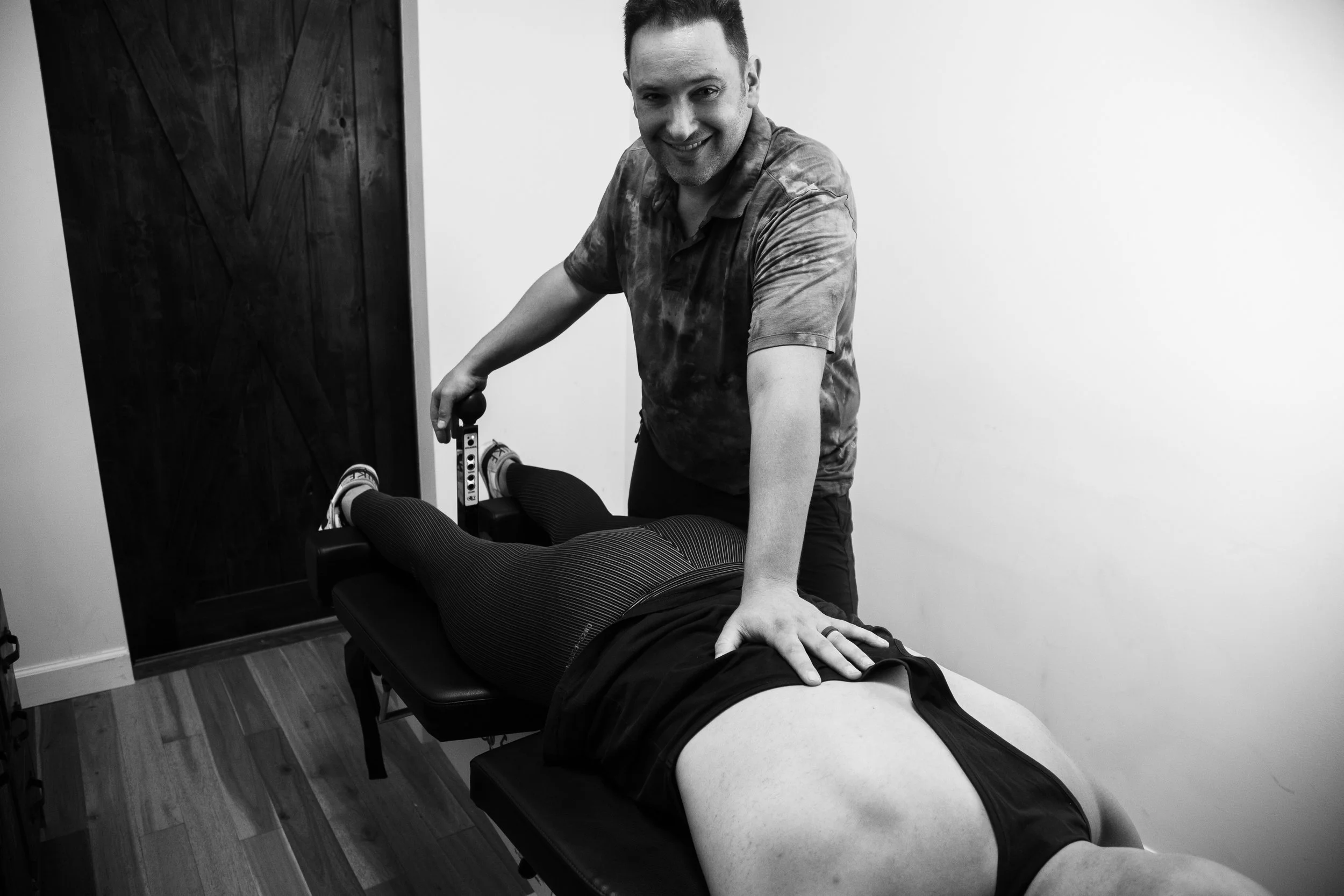
By Dr. Jason Fidler DC
When patients come in dealing with low back pain, sciatica, disc irritation, or neck symptoms that have not responded to other approaches, one of the tools I reach for is COX flexion-distraction. I get asked about it regularly, and the questions are usually some version of the same thing: what is it, how does it work, and is there actual evidence behind it?
Those are fair questions, and they deserve real answers. This post covers all three, starting with the clinician who spent decades developing and studying the technique, moving through how it is actually delivered, and then getting into what the published research does and does not say.
Who Was James Cox and Why Does It Matter?
Dr. James M. Cox is a chiropractor from Fort Wayne, Indiana who began developing his distraction technique in the 1960s. What started as a clinical problem, how to decompress the lumbar spine in a controlled, reproducible way, became a decades-long research project. Cox was not content with simply developing a technique that seemed to work anecdotally. He wanted to understand why it worked, for whom it worked, and how to deliver it consistently enough that other clinicians could learn and replicate it.
That last part matters more than it might seem. Manual therapy techniques are notoriously difficult to study because the treatment variable, the clinician's hands, is hard to standardize. Cox addressed this by designing a specialized segmented table that allowed the technique to be delivered with precision and documented with enough specificity to support research. He refined that table through multiple iterations, collaborating with bioengineers to measure what was actually happening at the disc during treatment. His textbook, Low Back Pain: Mechanism, Diagnosis and Treatment, now in multiple editions, became a foundational clinical and research reference in the field.
Cox also trained other practitioners, which created a broader clinical community using the same approach and, importantly, generating outcomes data across a larger patient population. The result is a technique with a more developed evidence base than most manual therapy approaches, which tend to exist on a spectrum between "widely used and poorly studied" and "studied in narrow populations under controlled conditions."
COX Technic, as the formalized version is known, sits closer to the studied end of that spectrum. That does not mean the evidence is conclusive across every application, but it does mean there is something substantive to examine.
How COX Flexion-Distraction Is Actually Delivered
The patient lies face down on the COX table. The table itself has a fixed upper section, which supports the thorax and pelvis, and a lower section divided into moveable segments corresponding to the lumbar spine and legs. That lower section is where the work happens.
I position my contact hand on the spinous process or the soft tissue over the segment I am targeting. With the other hand, I guide the lower section of the table into a slow, rhythmic distraction, moving the segment through flexion, extension, lateral bending, or a combination, depending on what the exam revealed and how the patient responds. The force is light. The movement is deliberate. Nothing happens quickly.
What the patient typically feels is a gentle pulling or decompression sensation, sometimes accompanied by a noticeable reduction in local pain or referred symptoms during the treatment itself. That response, or the absence of it, is clinical information. If a particular angle or direction centralizes symptoms or reduces them, I move toward that. If something aggravates, I change it immediately.
The same table and approach can be adapted for the cervical spine, using modified positioning and a gentler application suited to the smaller structures of the neck.
A session is not passive. I am making decisions continuously based on what I feel in the tissue and what the patient reports, visit to visit and sometimes minute to minute within a single session. That is meaningfully different from automated decompression systems, where a preset program runs regardless of how the patient is actually responding.
What the Research Says
Direct flexion-distraction evidence
The most directly relevant literature review comes from Gay, Bronfort, and Evans, published in the Journal of Manipulative and Physiological Therapeutics in 2005. Their review examined available studies on distraction manipulation of the lumbar spine and found support for its use in patients with disc herniation and low back pain with radiculopathy. They noted improvements in pain and functional outcomes across the studies reviewed, while also acknowledging the need for larger, higher-quality trials going forward.
The strongest individual study in the COX-specific literature is a randomized clinical trial by Gudavalli, Cambron, McGregor, and colleagues, published in the European Spine Journal in 2006. This trial compared flexion-distraction directly with an active exercise program in patients with chronic low back pain. Both groups improved, which is worth noting, but the flexion-distraction group showed meaningful reductions in pain and disability. A related follow-up paper by Cambron and colleagues, published in Chiropractic and Osteopathy in 2006, examined healthcare utilization in the same patient population and found that the flexion-distraction group used less health care over the follow-up period than the exercise group, suggesting some durability to the outcomes. (Full citation details for the Cambron paper should be verified before any clinical publication.)
Gudavalli has also contributed biomechanical research examining what actually happens at the lumbar disc during flexion-distraction, including work on intradiscal pressure changes during the technique. This line of research helps explain the proposed mechanism, that distraction reduces compressive loading at the disc and may facilitate fluid movement and reduce nerve root irritation, rather than relying only on clinical outcome data.
Broader manual therapy research as supporting context
It is worth being clear that the following studies are not specific to COX flexion-distraction. They are about spinal manipulation and mobilization broadly, and they provide useful supporting context rather than direct evidence for this technique specifically.
A Cochrane review by Rubinstein, Terwee, Assendelft, and colleagues, published in 2012, examined spinal manipulative therapy for acute low back pain and found it comparable in outcomes to other recommended treatments, including exercise and standard medical care. A comprehensive evidence review by Bronfort, Haas, Evans, Leininger, and Triano, published in Chiropractic and Osteopathy in 2010, concluded that spinal manipulation and mobilization were supported by evidence across both acute and chronic low back pain presentations, as well as for neck pain.
These reviews matter because they situate hands-on spinal care within a broader evidence context. But they should not be read as confirmation that COX specifically will produce a particular outcome in a particular patient.
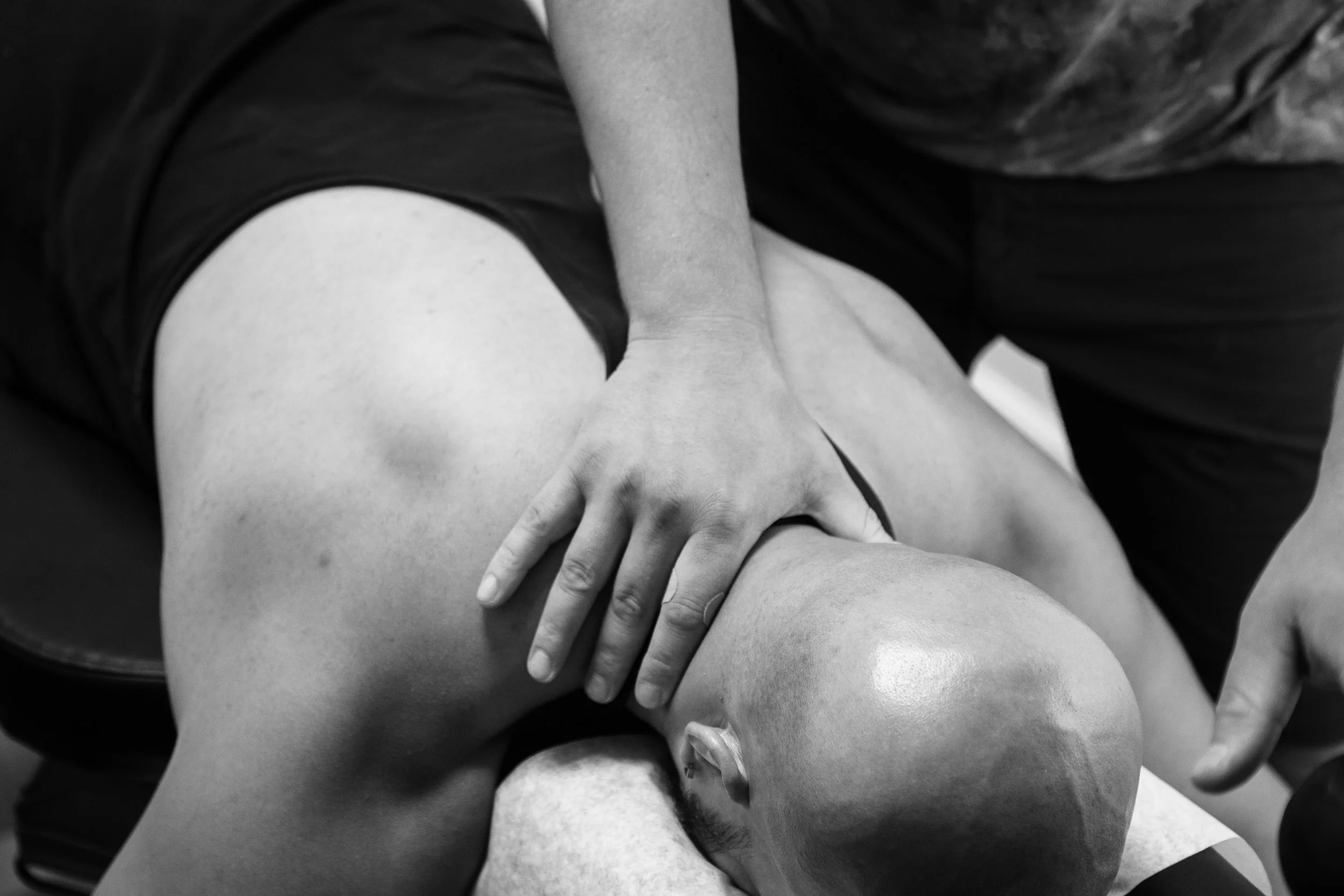
COX cervical flexion-distraction is a gentle, hands-on form of spinal decompression used to reduce stress on irritated joints, discs, and nerve roots in the neck.
Cervical decompression
For cervical applications, the evidence is more limited and more mixed. A Cochrane review by Graham, Gross, Goldsmith, and colleagues, published in 2008, examined mechanical traction for neck pain with or without radiculopathy. The review found some evidence of benefit, particularly when traction was combined with other treatments, but noted that the overall quality of available studies was limited. That finding aligns with how I use cervical COX at Functional Rehab, always in combination with manual therapy, thoracic mobility work, and progressive rehab rather than as a standalone intervention.
What the Research Does Not Tell Us
Research supports the use of flexion-distraction for appropriate patients. It does not mean everyone with back pain, disc symptoms, or sciatica needs decompression. The evidence is a starting point for clinical reasoning, not a substitute for it.
The exam still matters. Symptom patterns, movement behavior, neurological findings, and the patient's response during treatment all shape whether COX is the right tool and how it should be applied. A technique with a solid evidence base can still be the wrong choice for a particular patient on a particular day, and the clinician's job is to know the difference.
How This Fits Into a Broader Rehab Plan at Functional Rehab
I use COX flexion-distraction as one part of an exam-driven plan, not as a standalone treatment. For most patients, it is the starting point that reduces irritability enough to make rehab work productive. The strength training, movement retraining, and load tolerance work that follows is what produces changes that last beyond the treatment table.
If you want a full breakdown of how COX decompression is used at Functional Rehab, including what a visit looks like, who it may or may not be appropriate for, and how it compares to adjustments and other approaches, the COX spinal decompression in Brooklyn service page covers all of it in detail.
References
Gay RE, Bronfort G, Evans RL. Distraction manipulation of the lumbar spine: a review of the literature. Journal of Manipulative and Physiological Therapeutics. 2005;28(4):266–273.
Gudavalli MR, Cambron JA, McGregor M, et al. A randomized clinical trial and subgroup analysis to compare flexion-distraction with active exercise for chronic low back pain. European Spine Journal. 2006;15(7):1070–1082.
Cambron JA, et al. Healthcare utilization following flexion-distraction vs. exercise for chronic low back pain. Chiropractic and Osteopathy. 2006. (Verify full citation before publishing.)
Rubinstein SM, Terwee CB, Assendelft WJJ, de Boer MR, van Tulder MW. Spinal manipulative therapy for acute low-back pain. Cochrane Database of Systematic Reviews. 2012.
Bronfort G, Haas M, Evans R, Leininger B, Triano J. Effectiveness of manual therapies: the UK evidence report. Chiropractic and Osteopathy. 2010;18:3.
Graham N, Gross AR, Goldsmith CH, et al. Mechanical traction for neck pain with or without radiculopathy. Cochrane Database of Systematic Reviews. 2008;(3):CD006408.